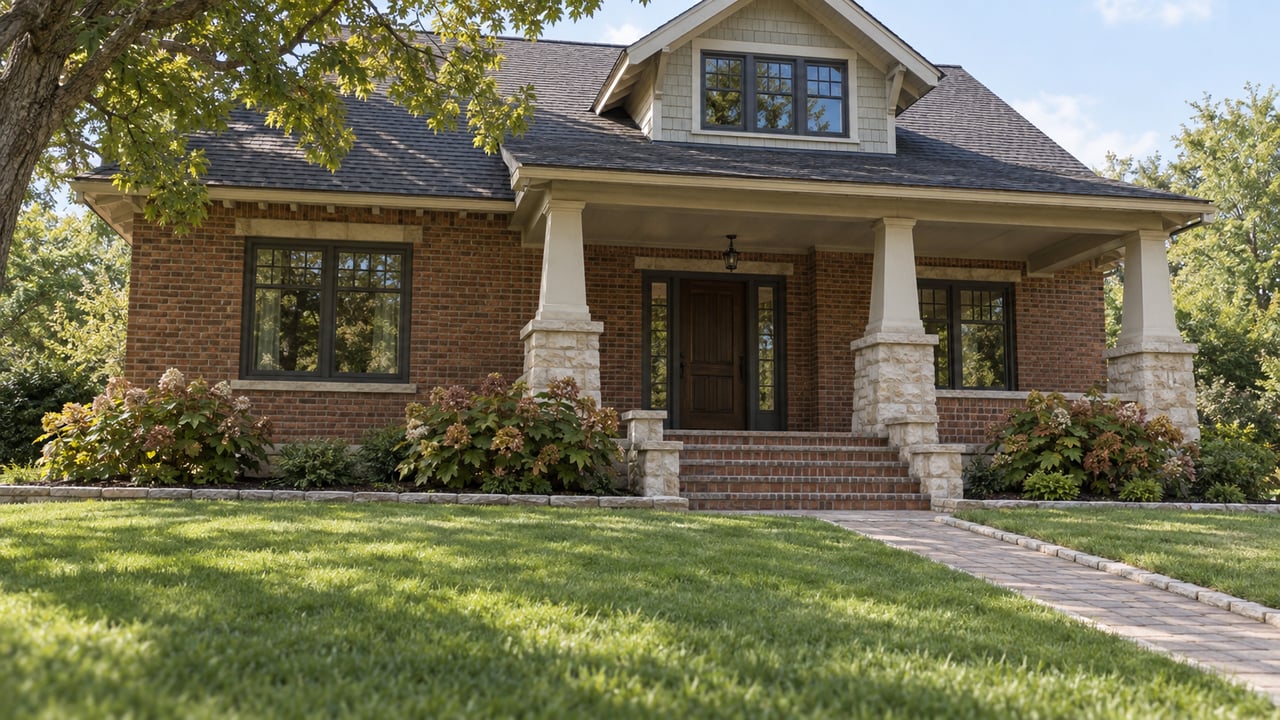
Bearden has a reputation as the affluent pocket of Knoxville, and one part of the neighborhood earns it.
There's a version of Bearden built on estate lots near the Cherokee Country Club, where stone and brick homes trace back to the neighborhood's founding as a 19th century farming community. There's also a second Bearden a few blocks away, closer to Kingston Pike, where most of the housing is older, smaller, and rented rather than owned.
Both versions carry the same neighborhood name. Only one of them is what most buyers picture when they search for a home there, and confusing the two is how a shopper ends up comparing the wrong number to their budget.
Three Ways to Measure the Same Zip Code
Pull three separate 2026 sources on Bearden's home prices and you get three different answers, and none of them are wrong exactly, they're just measuring different things.
| Source | Figure | As of |
|---|---|---|
| NeighborhoodScout | Median real estate price: $629,014 | January 2026 |
| Propcash market snapshot (ZIP 37919) | Median sale price: $385,000 | Data through January 2026, published April 2026 |
| Homes.com neighborhood guide | Condos: $170,000 to $400,000. Newer 3-4 bed homes: $400,000 to $600,000 | July 2026 |
NeighborhoodScout's figure ranks Bearden more expensive than 88.8 percent of Tennessee neighborhoods and 73.8 percent of neighborhoods nationwide. Propcash's snapshot, pulling the same ZIP code, lands nearly $250,000 lower and describes the market as stable with strong investor interest tied to rental demand. Homes.com splits the difference by describing two separate price bands rather than a single number at all.
None of these sources disclose their exact methodology, so it's worth being honest about what can and can't be concluded. What's clear is that a figure north of $600,000 and a figure in the high $300,000s cannot both describe the same typical transaction. The most reasonable explanation is that they're drawing from different slices of the same inventory, one weighted toward the estate-lot end of Bearden, one weighted toward the smaller, older housing stock that makes up most of what's actually on the ground.
The Bearden That Doesn't Show Up in a For-Sale Search
Bearden's housing stock is mostly renter occupied. That's not a guess. It's how NeighborhoodScout characterizes the neighborhood's residential real estate, which it describes as primarily small studio-to-two-bedroom and medium three-to-four-bedroom apartment complexes, high-rise apartments, and single-family homes, most built between 1940 and 1969, with a second wave from 1970 to 1999. Average rent in the neighborhood runs $2,168 a month.
Bearden sits close enough to the University of Tennessee that student demand feeds directly into that rental stock. Rand Townhomes, a pet-friendly community on Sutherland Avenue in the Bearden Village section, sits less than two miles from UT's campus and gets served by Knoxville Area Transit buses running every 30 minutes. NeighborhoodScout goes as far as calling the broader neighborhood college-student friendly, which tracks with a market where a meaningful share of units function as rental housing rather than owner-occupied homes that would ever show up in a for-sale median.
This is also the Bearden with the commercial corridor most people associate with the name. Kingston Pike runs through the center of the neighborhood and carries, per one recent local guide, the region's highest density of locally owned restaurants along any single Knoxville corridor. Seven grocery stores sit along that same stretch, including Kroger, Food City, Trader Joe's, and Whole Foods, alongside West Town Mall's roughly 150 stores. None of that commercial density changes what a home costs to buy, but it explains why rental demand stays strong even as ownership turnover in this section of the neighborhood stays comparatively rare.
The Pocket That's Actually Selling for $600,000 and Up
The other Bearden is older in a different sense. Much of the housing stock is historic, with many homes dating to construction that began in the 1920s.
This is the section built around estate lots, closer to the Sequoyah Hills border, where grand stone and brick homes sit on larger parcels than anything near the commercial strip. Cherokee Country Club anchors part of this pocket, a social club that has operated in Bearden for more than a century and includes a golf course designed by Donald Ross. Lakeshore Park, nearly 200 acres of trails, event space, and sports fields overlooking the Tennessee River, sits within reach as well, hosting the New Ground Music Festival and serving as a wedding venue for the neighborhood.
These are the homes producing sale prices in the $600,000-and-up range, and they're almost certainly what's pulling NeighborhoodScout's neighborhood-wide figure toward $629,014. They are not, however, representative of what a buyer will find if they search "homes for sale in Bearden" and expect a typical result, because the volume of transactions in this pocket is small relative to the neighborhood's total housing stock.
What the Split Means If You're Pricing a Purchase This Fall
A single Bearden median, whichever number you pick, tells you almost nothing about what a specific listing should cost. The neighborhood contains a rental-heavy corridor built mostly in the mid-20th century and a much smaller estate pocket built starting in the 1920s, and a price that averages across both is describing a market that doesn't actually exist as one thing.
The more useful approach is to anchor a comparison to the specific pocket a listing sits in, not the neighborhood name on the label. A condo or smaller home near Kingston Pike should be priced against Homes.com's $170,000 to $400,000 band and against the rental yield that a $2,168 average monthly rent can support at that entry price, which is exactly the math that's been drawing investor interest according to the propcash snapshot. A stone or brick home on an estate lot near Cherokee Country Club belongs in a different conversation entirely, one closer to the $600,000-plus range.
Financing context matters here too. As of July 2, 2026, Freddie Mac reported the average 30-year fixed mortgage rate at 6.43 percent, which affects what a monthly payment looks like at either end of Bearden's price spread differently. Citywide, Redfin's data for the three months ending May 2026 put Knoxville's median sale price at roughly $317,000, with homes taking an average of 52 days to sell compared to 46 days the year before. That slower pace gives buyers more room to request the comparable sales that actually match their target pocket, rather than accepting a neighborhood-wide average that was never built to answer their specific question.
A Few Questions Worth Asking Directly
Is Bearden a good place to buy a rental property? The average rent NeighborhoodScout reports, $2,168 a month, combined with an entry price closer to the $170,000 to $400,000 range Homes.com describes for condos and smaller homes, is the math behind the investor interest propcash's snapshot flagged for the ZIP code. That calculation looks very different for a home priced in the estate-lot range.
Why do published Bearden prices vary so widely? Because Bearden isn't one housing market wearing one name. A figure that includes the estate-lot pocket near Cherokee Country Club will run well above a figure drawn mostly from the older, renter-occupied stock near Kingston Pike, even when both are technically describing the same ZIP code.
If you're trying to figure out which Bearden a specific listing actually belongs to, and what that means for what you should offer, that's the kind of comparison worth walking through with someone who tracks these blocks street by street. Terri Lawson can help you sort out which number in this neighborhood actually applies to you.
